
Most organizations have invested time and effort in communicating their Employee Assistance Program (EAP).
There are emails, intranet resources, posters, onboarding materials, benefits guides, and reminders during Mental Health Week.
Employees have heard of it.
Yet many organizations continue to ask the same question:
If employees know support is available, why aren’t more of them accessing it?
The answer is that awareness is only one part of the equation.
Knowing a resource exists doesn’t automatically mean employees understand when it may be helpful, feel confident accessing it, or recognize that their situation warrants support.
Just as knowing a gym membership exists doesn’t guarantee people will exercise, awareness alone rarely drives behaviour change.
To encourage meaningful engagement with workplace mental health support like EAP, organizations need to go beyond awareness and build recognition, confidence, and capability.
That’s where Opening Minds Workplace Mental Health Training Solutions make a difference.
Awareness Is Important—But It’s Only the Starting Point
Awareness initiatives play an important role in workplace mental health strategies.
Employees cannot access supports they don’t know exist.
Communication campaigns, benefits education, and regular reminders help ensure that resources remain visible and accessible.
However, awareness alone doesn’t answer several important questions employees may have:
- How do I know if support would be helpful?
- What challenges are appropriate to discuss through EAP?
- What happens when I contact the service?
- Is it confidential?
- How do I start the conversation?
- Do I need to wait until things become serious?
These questions represent the gap between awareness and action.
Many organizations are discovering that increasing engagement with mental health supports requires more than communication. It requires helping employees and managers develop a deeper understanding of mental health, available resources, and when support can be beneficial.
The Difference Between Awareness and Recognition
Awareness means:
“I know the EAP exists.”
Recognition means:
“I understand when support may be helpful, and I know how to access it.”
This distinction is important.
An employee may be experiencing ongoing stress, difficulty sleeping, reduced concentration, anxiety about work, caregiving pressures, or personal challenges.
They may know the EAP exists yet still think:
- “This is probably normal.”
- “I’m sure it will pass.”
- “Other people have bigger problems.”
- “I don’t think this is what the service is for.”
In these situations, awareness exists.
Recognition does not.
Recognition helps people connect their experiences with available supports and empowers them to take action when appropriate.
For organizations seeking better outcomes from their mental health investments, this shift is critical.
What Gets in the Way of Help-Seeking?
When employees do not access available supports, it’s rarely because of a single factor.
Several common barriers may influence whether someone seeks help.
Limited Understanding of When Support Can Help
Many people assume mental health resources are intended only for significant or crisis-level concerns.
They may not realize that support can also help with:
- Stress and burnout
- Anxiety
- Sleep challenges
- Grief and loss
- Family or relationship concerns
- Caregiving responsibilities
- Workplace pressures
- Life transitions
Without this understanding, employees may overlook resources that could be beneficial.
Uncertainty About the Process
Employees may not know:
- What happens when they call
- What services are available
- How appointments are arranged
- How confidentiality is protected
Practical uncertainty can become a barrier, even when awareness is high.
Workplace Norms and Culture
Employees pay attention to how leaders and colleagues talk about mental health.
When mental health conversations are normalized and respectful, employees are often more comfortable exploring support options.
When the topic is rarely discussed, people may be less likely to engage with available resources.
Preference for Self-Management
Many employees naturally attempt to manage challenges independently before seeking formal support.
While this can be effective in many situations, it may also delay access to resources that could help address concerns earlier.
Why Recognition Matters
Recognition helps employees understand not only that support exists but why it may be relevant to them.
A recognition-based approach helps employees:
Identify Early Signs
People learn to recognize changes in mood, energy, sleep, concentration, stress levels, and behaviour before challenges become overwhelming.
Understand Mental Health as a Continuum
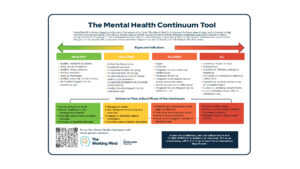
Rather than viewing mental health through a simple and stigmatized “healthy” versus “unwell” lens, employees learn that everyone experiences fluctuations in mental wellbeing throughout life.
Recognize That Support Is Appropriate Early
Employees become more aware that support can be valuable before difficulties significantly affect wellbeing, relationships, or work performance.
Build Confidence in Taking Action
When employees understand resources and know what to expect, accessing support feels more practical and less intimidating.
Recognition creates the bridge between information and action.
How Opening Minds Workplace Solutions Build Recognition
Opening Minds Workplace Mental Health Training Solutions help organizations move beyond awareness toward understanding, confidence, and practical action.
The Working Mind supports managers by helping them:
- Recognize changes in well-being for yourself and others
- Build confidence in mental health conversations
- Respond appropriately and supportively
- Guide employees toward available resources
Managers play a significant role in creating workplace environments where employees feel supported and informed.
Mental Health First Aid (MHFA) supports employees by helping them:
- Understand mental health and wellbeing more broadly
- Recognize signs that support may be beneficial
- Build confidence in supporting colleagues
- Learn how and when to access available resources
- Develop practical knowledge about help-seeking
Together, these programs help establish a common language and shared understanding across the organization.
From Communication to Capability
The most effective workplace mental health strategies combine communication with capability development.
Communication answers: “What resources are available?”
Capability answers: “How do I recognize when support is needed, and what do I do next?”
Organizations need both.
Awareness campaigns remain valuable because they keep resources visible.
Training helps employees and managers understand how to use those resources effectively.
When organizations combine the two, employees are more likely to:
- Recognize when support may be beneficial
- Feel comfortable exploring available resources
- Understand how services work
- Access support earlier when appropriate
- Support one another more effectively
This is where sustainable behaviour change begins.
The Organizational Impact
When organizations invest in awareness, recognition, and capability together, they often see benefits across several areas.
More Confident Managers
Managers develop practical skills for supporting employees and navigating conversations related to wellbeing.
Greater Employee Understanding
Employees have a clearer picture of what supports exist and when they can be useful.
Stronger Psychological Safety
Teams become more comfortable discussing wellbeing concerns respectfully and appropriately.
Earlier Access to Support
Employees gain confidence in seeking assistance before challenges become more disruptive.
Stronger Return on Existing Investments
Organizations are more likely to realize the value of benefits and support services that already exist within their workplace.
A Better Question for HR Leaders
Many organizations ask: “Do employees know the EAP exists?”
That’s an important question.
But a more strategic question may be:
“Do employees understand when support might help, feel confident accessing it, and know how to take the next step?”
The distinction matters.
Awareness contributes to visibility.
Recognition contributes to action.
Capability contributes to long-term organizational impact.
The strongest workplace mental health strategies address all three.
Making Awareness Work Harder
Awareness campaigns should not disappear.
Instead, they should be integrated into a broader workplace mental health strategy.
A practical approach might look like this:
Before Training
Communications create visibility and reinforce the organization’s commitment to wellbeing.
During Training
The Working Mind and MHFA build understanding, confidence, and practical skills.
After Training
Awareness initiatives reinforce learning, remind employees about available resources, and sustain momentum.
In this model, awareness becomes more effective because it is supported by recognition and capability-building.
Closing Thoughts
Most organizations have done a good job making employees aware that support resources exist.
The next challenge is helping people understand when and how to use them.
Awareness alone does not always lead to action.
Recognition, confidence, psychological safety, and manager capability help close that gap.
Opening Minds Workplace Mental Health Training Solutions support organizations in developing these capabilities through The Working Mind and Mental Health First Aid.
The goal isn’t simply to increase awareness.
The goal is to create workplaces where employees understand their options, know when support may be beneficial, and feel confident accessing resources when they need them.
That’s where meaningful impact begins.
Move Beyond Awareness
If your organization has invested in mental health supports but wants to strengthen employee understanding, confidence, and early intervention, Opening Minds Workplace Mental Health Training Solutions can help.
Learn how The Working Mind and Mental Health First Aid can support managers, employees, and leaders in creating a more informed, supportive workplace.
Strengthen Employee Mental Health Capability
Opening Minds Training Programs
Opening Minds offers three workplace mental health training programs designed to build awareness, reduce stigma, and strengthen organizational capability.
Mental Health First Aid (MHFA)
Equips individuals with practical knowledge and skills to support a person experiencing a decline in mental well-being or a mental health crisis — until professional help is available.
The Working Mind (TWM)
A workplace-focused mental health training course designed to change how employees, managers, and leaders think, feel, and act about mental health at work.
Psychological Health and Safety (PHS)
A proactive, systems-level approach addressing work-related factors contributing to mental health problems — supporting healthy, safe, and productive workplaces.